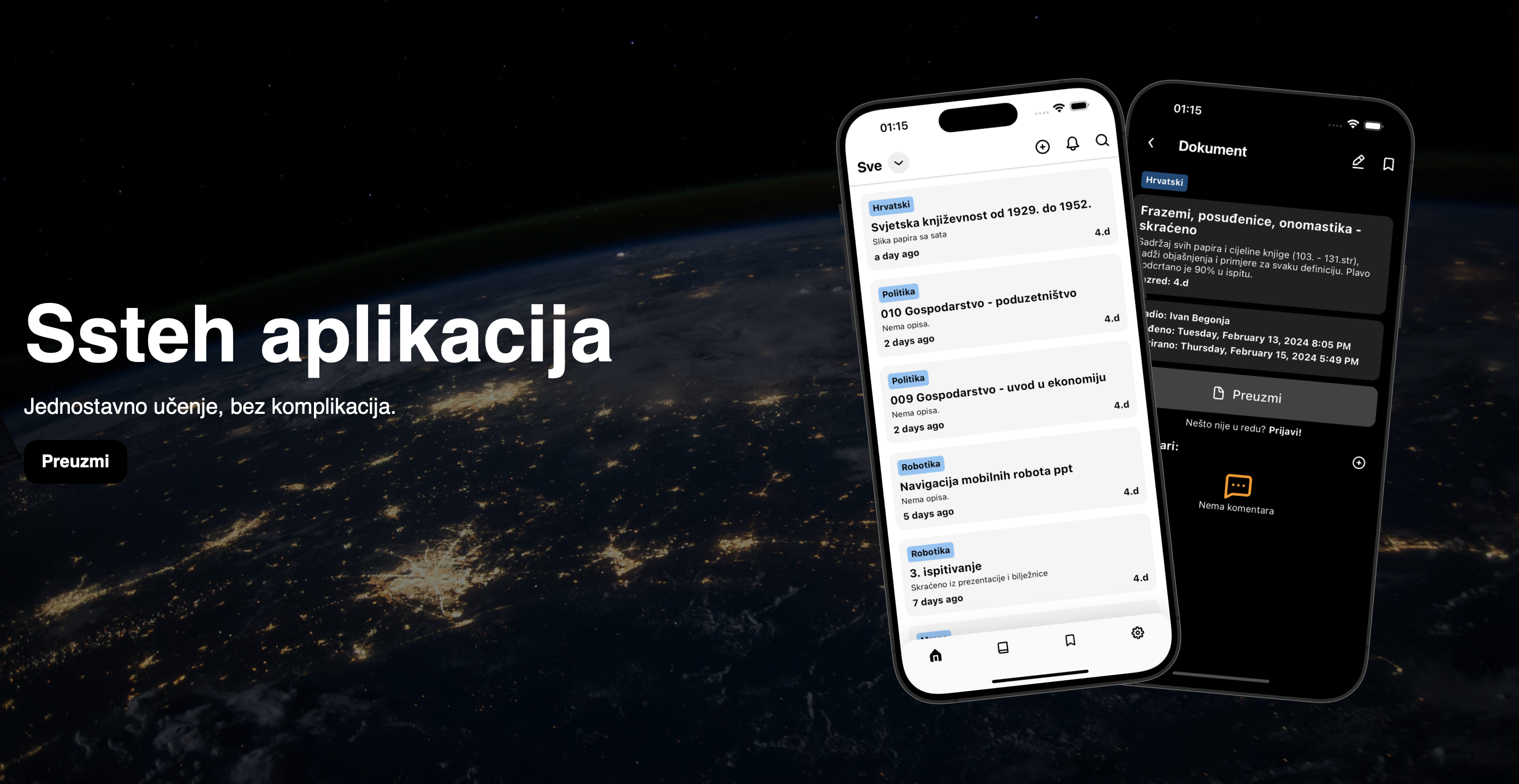
Useful material is only useful when students can find it.
Study notes and recommendations often circulate in private chats, disappear in old folders or arrive without the context needed to judge them.
Ssteh explored a shared home for curated resources and collaborative learning. The product direction centered organization, approachable discovery and contribution by the students who understand the need firsthand.
Browse by need
Organize resources around the way students look for subjects and materials.
Useful context
Show enough information to evaluate a resource before opening it.
Community input
Make sharing material a clear, repeatable part of the platform.
Quality over volume
Treat organization and relevance as product features, not afterthoughts.
A simple path from question to resource.
The concept reduces navigation depth and keeps the core object—the learning resource—at the center of the experience.
Project surface
- Responsive web
- Resource taxonomy
- Search
- Community content
- Archive
Make the library feel approachable.
Familiar categories
Use the language of school subjects and topics rather than an abstract content system.
Scan before reading
Cards expose the most useful metadata without making the page feel like a spreadsheet.
Lower the barrier
Sharing should ask for only the information needed to keep the library useful.
Peer, not institution
The interface should feel helpful and direct rather than formal or administrative.
A useful lesson in content-led products.
Ssteh showed that the interface is only half the product. A resource platform succeeds through the quality, structure and continued care of what it contains.
Taxonomy matters
A clear content model makes both discovery and future development easier.
Add the record
Document verified user numbers, contributions and feedback when historical data is available.